Laguna Greenbelt Inc. teams up with Rock Design Associates to enhance Irvine-Laguna Wildlife Corridor
Laguna Greenbelt Inc. has announced that they have retained Rock Design Associates, led by Robert Rock, to spearhead a stakeholder-engaged process aimed at identifying innovative and responsible design strategies for the Irvine-Laguna Wildlife Corridor. This vital corridor links the Cleveland Inland Natural Communities Conservation Plan (NCCP) core habitat with the Laguna Coast Wilderness NCCP core habitat.
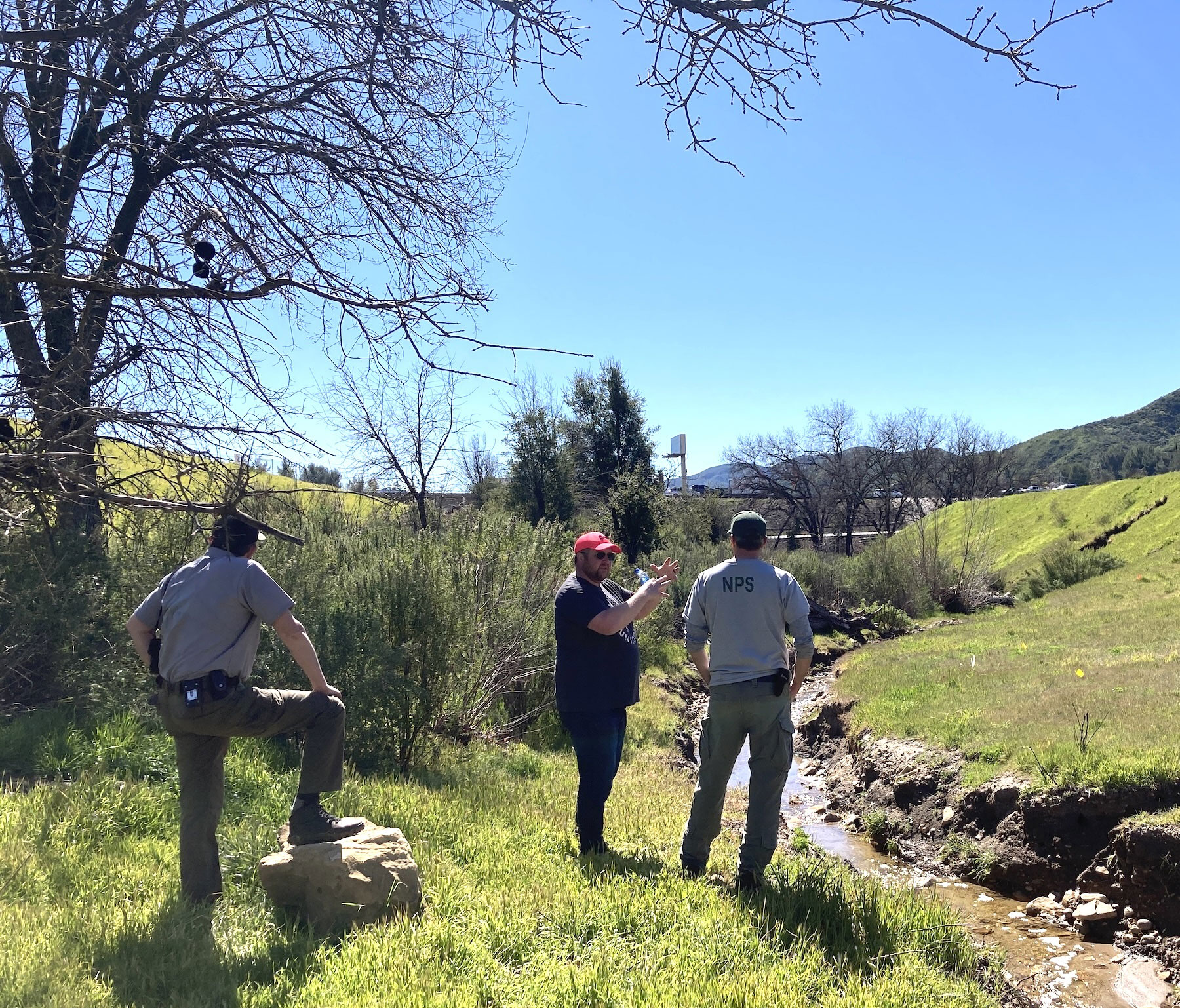
Click on photo for a larger image
Courtesy of Robert Rock
The team at Rock Design Associates will focus on measures to address safe wildlife passage
Rock Design Associates has unparalleled experience leading teams of researchers, innovators, experts and collaborators to design, document and ultimately construct infrastructure for wildlife. Robert Rock and his team have recently been in the news because of their ongoing collaboration with Caltrans District 7 to design and build the Wallis Annenberg Wildlife Crossing over 10 lanes of the 101 Freeway in Agoura Hills, north of Los Angeles. Earlier this month, the project reached a critical milestone as the soils were placed atop the crossing structure over the freeway.
Humans directly benefit from healthy and robust natural areas within our communities and a fully functioning wildlife corridor is not only a key element in sustaining balanced ecosystems, but it also is a functional tool for making roadways safer by eliminating vehicle-wildlife collisions. Rock and his team will focus on measures to address safe wildlife passage, such as opportunities for modifications to fencing and existing undercrossing, and identifying locations for wildlife-friendly culvert maintenance, while exploring possibilities for additional wildlife connectivity infrastructure. These improvements are also expected to reduce the potential for costly and sometimes deadly collisions between vehicles and wildlife.
This collaborative effort will benefit a wide array of species native to the region, from bobcats to gnatcatchers, ensuring a thriving ecosystem for generations to come.
In addition to on-site investigations with wildlife biology experts and key local stakeholders, a design workshop is planned for later this summer, providing partners and stakeholders with the opportunity to share their views and expertise.
If you would like to participate in this vital initiative, reach out to Terry Watt, Strategic Advisor to the Wildlife Corridor Working Group, via the Corridor portal by clicking here or email at terryjwatt@gmail.com.