

Chronic absenteeism at Thurston drops from 14.2% to 7.2%
By SARA HALL
Thurston Middle School staff reported last week that chronic absenteeism has dropped nearly in half over the past four years, crediting earlier intervention and a stronger focus on student connections.
Chronic absenteeism at Thurston declined from 14.2% in the 2021-22 school year to 7.2% in 2025-26, explained Thurston Principal Joe Vidal. The COVID-19 pandemic left a mark on student attendance, he said.
“We’re proud of our progress and confident that we can continue to trend in the right direction,” Vidal commented. “When students feel known and connected, they come to school.”
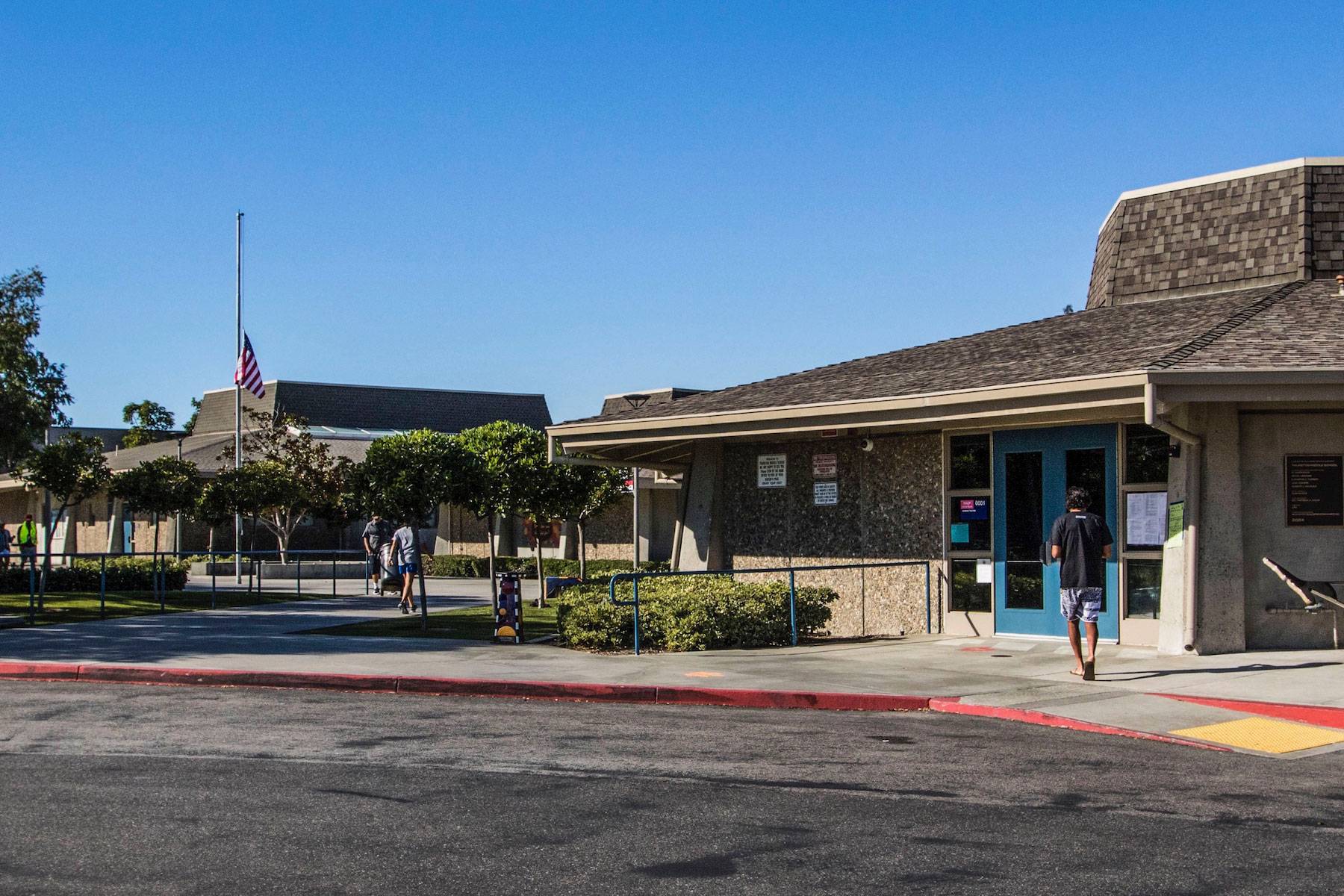
Click on photo for a larger image
Photo by Mary Hurlbut
Thurston Middle School has reduced its chronic absenteeism rate from 14.2% to 7.2% over four years, with a goal of bringing the rate below 5% in 2026-27
The Laguna Beach Unified School District Board of Education heard the presentation on Thursday, Oct. 22. Staff highlighted site-level progress, data-driven interventions and significant multi-year reductions in chronic absenteeism achieved through a team-based Multi-Tiered System of Support (MTSS) framework.
Thurston’s progress reflects the school moving beyond the pandemic period, commented Board Member Howard Hills. There was significant absenteeism associated with that time, he added.
He commended staff’s efforts and everything they have accomplished.
“Whenever we see tangible progress like this it’s very encouraging,” Hills said.
Board Member Dee Perry praised school staff’s efforts to ensure that every student has a trusted adult and peer support.
“The connection with students…that’s what keeps them coming back,” she said.
Data showed that approximately one in seven Thurston students was chronically absent in 2021-22. An initial review of attendance practices revealed that standard compliance notifications were being issued too late to effectively address emerging attendance problems.
In response, Thurston reframed its approach around early identification, team-based outreach and addressing root causes. The school shifted its outreach protocols to connect with families after three absences rather than nine and expanded the use of short-term independent study.
An analysis of school data indicated that illness remains the primary driver of absences, accounting for 78% of missed days in 2022-23 and 66% in 2025-26. Unexcused absences were largely driven by short-term family travel, with 510 days recorded in 2022-23 and 682 days in 2025-26. Families don’t always realize how quickly those days add up, Vidal noted.
Students needing additional support have access to a team that includes an attendance clerk, administrators, social workers, teacher leads and district community partners. Efforts include weekly data reviews, letters and personal calls, student check-ins and family meetings. During the last school year, Thurston staff made more than 275 contacts with families and held 45 meetings, Vidal reported.
This school year, Thurston plans to initiate outreach even earlier, before students reach key attendance thresholds of three and six absences, while providing positive attendance incentives. The goal is to reduce the overall chronic absenteeism rate to below 5% in 2026-27.
For each situation, staff consider the underlying reasons for a student’s absence, including health conditions, mental health challenges or feelings of disconnection from school.
A student unable to attend because of a health condition may need support from a specialized team through a formalized plan, Vidal explained. Students experiencing mental health challenges may benefit from counseling and strategies to help them return to school. Other situations may call for conversations with families or consideration of independent study as an option, he added.
A recent study cited during the presentation found that 93% of students could name a trusted adult at school. When asked how they would like to connect with adults, 57% said they appreciated a fist bump or high five, while 54% said they wanted to be greeted by name.
Click open story button to continue reading…
“Imagine that, such a simple and meaningful gesture and it costs nothing but intention,” Vidal said.
During public comment, Erin Berryman noted that as a parent of a student who travels for sports and family commitments, she finds the independent study program helpful. Students are also sometimes pulled out of school for activities related to their college preparation, she added.
“The independent study program is incredible and I hope you continue to do it,” she said.
Board Member Joan Malczewski also praised the independent study program. Missing school can be stressful for some students, she noted, and being able to complete their work while away is helpful. It also provides an opportunity to teach students responsibility when they are absent, she added.
Hills noted that he participated in independent study at both Thurston and Laguna Beach High School.
“It changed my life because I wasn’t doing well in the classroom,” he said, adding that the program helped him launch his career in academics.
~~~~~~~~
Sara Hall covers City Hall and is a regular contributor to Stu News Laguna.